


Choosing suitable adult incontinence products for bariatric patients requires more than selecting a larger size. Differences in waist, hip, and thigh measurements can affect product fit, leakage protection, and wearing comfort. Limited mobility and extended wearing periods may also create additional care challenges. Understanding the available product types and their key features helps identify solutions that provide reliable protection without compromising comfort.
1. Understanding the Incontinence Care Needs of Bariatric Patients
Bariatric patients may require adult incontinence products with wider size ranges and more adaptable designs. Standard products may not provide sufficient coverage around the waist, hips, or thighs, increasing the risk of shifting and leakage.
Fit is particularly important during movement and position changes. When a diaper is too tight, it may cause pressure and discomfort. When it is too loose, gaps around the legs or waist can allow urine to escape. Adjustable fastening tabs, flexible waistbands, and well-designed leakage barriers help maintain a more secure fit.
Absorbency and skin comfort are equally important. Some individuals may need protection for extended periods because of limited mobility or assistance requirements. In these situations, products should offer effective liquid retention, a relatively dry surface, and breathable materials to help reduce prolonged moisture exposure.
The main consideration is not simply choosing a larger diaper, but finding a product that accommodates body measurements while providing sufficient coverage, absorbency, and comfort.
2. Suitable Types of Adult Incontinence Products for Bariatric Patients
Different products serve different care needs, and the most suitable option depends on mobility, incontinence level, and daily routines.
Bariatric Adult Diapers and Briefs
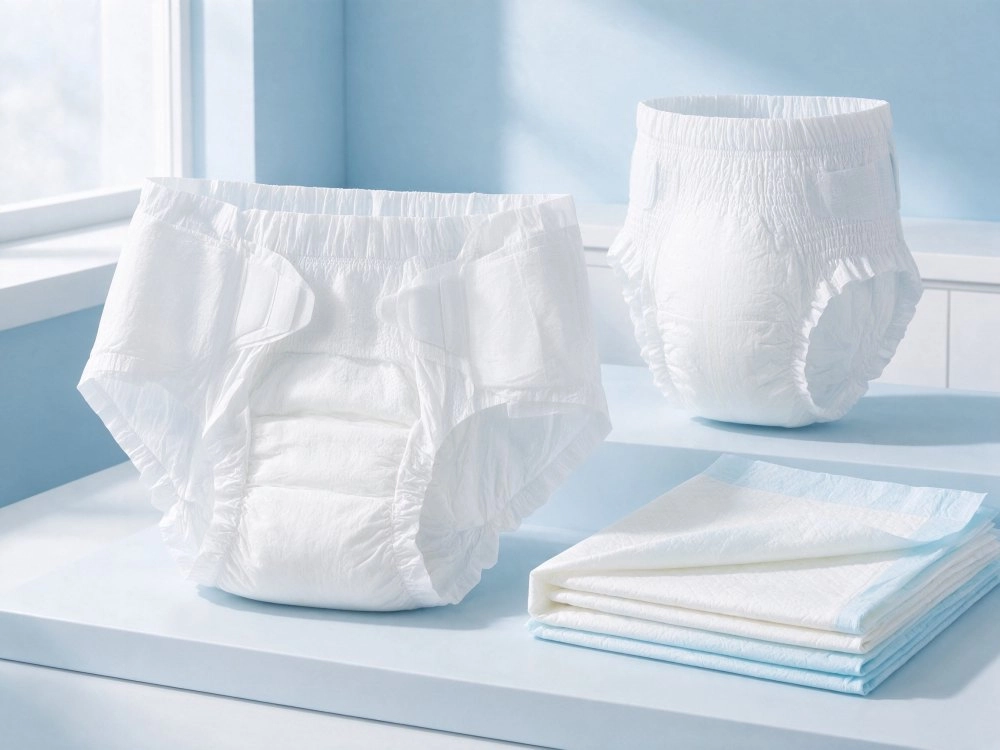
Adult diapers with adjustable fastening tabs are often suitable for individuals who need assistance with changing. Their adjustable design makes it easier for caregivers to achieve a secure fit across different body shapes. When selecting these products, pay attention to the waist and hip size range, side panel coverage, leg cuffs, and fastening strength.
Bariatric Pull-Up Incontinence Underwear
For individuals who can move independently and manage their own clothing, pull-up underwear may offer greater convenience. Its underwear-like structure supports easier dressing and removal. A flexible waistband and sufficiently wide leg openings are important for accommodating larger body measurements without excessive tightness.
Disposable Underpads
Disposable underpads provide additional protection for beds, wheelchairs, chairs, and other surfaces that may come into contact with moisture. They are particularly useful in overnight care or situations involving limited mobility. Their absorbent core helps retain liquid, while the waterproof backsheet prevents moisture from reaching the underlying surface.
When choosing disposable underpads for bariatric care, consider both absorbent capacity and coverage size. A larger pad may provide better protection for beds or seating areas, but its absorbency still depends on the core structure and materials. Underpads work best as a supplementary protective layer rather than a replacement for wearable incontinence products.
In practice, adjustable adult briefs may be more suitable for individuals who need caregiver assistance, while pull-up underwear can support greater independence. Disposable underpads can complement either option by protecting surrounding surfaces.
3. Key Features to Consider When Choosing Bariatric Incontinence Products
Several product features should be evaluated together to ensure reliable performance.
Size and Fit: Check the waist, hip, and thigh measurements rather than relying on general size labels. Products with adjustable tabs or flexible waistbands can accommodate different body shapes more effectively. A secure fit should provide adequate coverage without creating excessive pressure.
Leakage Protection: Wider side panels, elastic leg cuffs, and effective leakage barriers help reduce the risk of side leakage, particularly when sitting, turning, or changing positions. The product should remain properly positioned during normal movement.
Absorbency: A larger product does not necessarily have a higher absorption capacity. The absorbent core, commonly made with fluff pulp and superabsorbent polymer (SAP), determines how quickly liquid is absorbed and how effectively it is retained. Rewet performance is also worth considering because excessive moisture returning to the surface can affect skin comfort.
Skin Comfort: Soft nonwoven topsheets help reduce friction, while breathable backsheets can support moisture vapor release. Flexible materials and smooth edges also contribute to a more comfortable fit during extended wear.
For disposable underpads, similar attention should be given to the topsheet, absorbent core, and waterproof backing. A suitable combination helps balance liquid absorption, surface dryness, and mattress protection.
Ultimately, choosing adult incontinence products for bariatric patients means matching product dimensions and construction to individual care needs. The right combination of wearable protection and disposable underpads can help improve daily hygiene, reduce leakage-related cleaning, and make routine care more manageable.


